Subcutaneous vs intramuscular peptide injection: when each wins
Subcutaneous and intramuscular injection are not interchangeable for peptides. Here's which route fits which compound and which goal.
May 22, 2026 · 8 min read · By Strength Peptide Editors
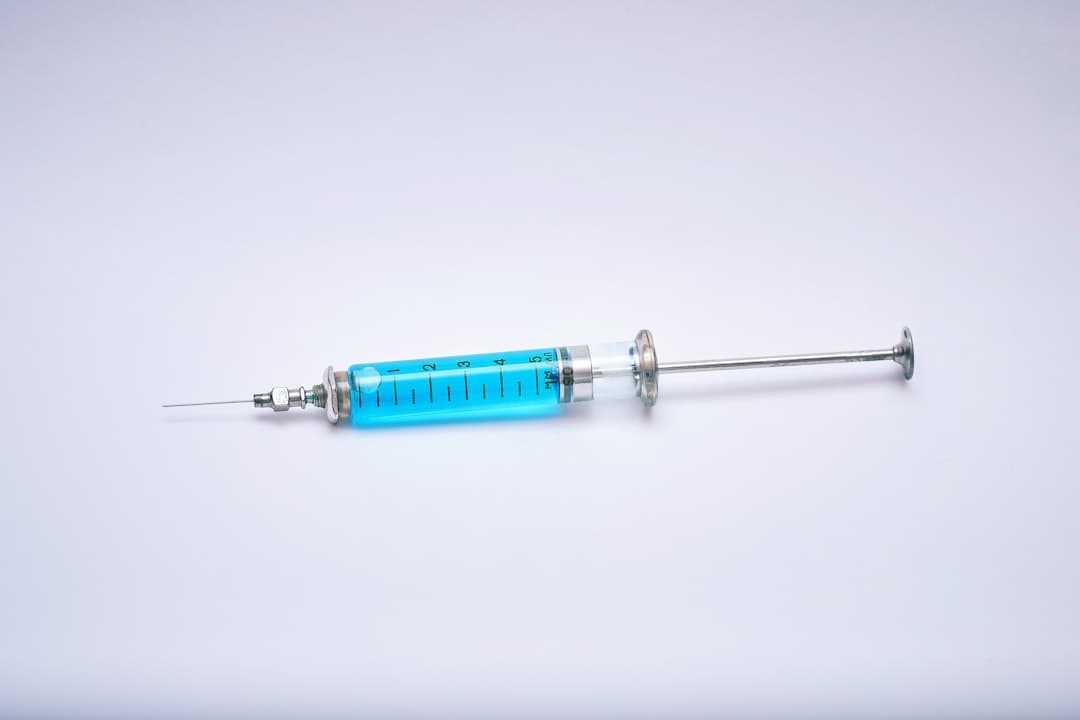
Most peptide guides treat the injection route as a footnote: subcutaneous unless stated otherwise. For BPC-157, Ipamorelin, and most general-use peptides, that's fine. For a smaller but important set — TB-500 in chronic injuries, IGF-1 LR3 in some applications, site-specific injury work with BPC-157 — the choice between subcutaneous and intramuscular changes the pharmacology in ways that matter.
This post walks through what each route actually does to a peptide molecule, when the choice matters, and the practical considerations that don't show up on vendor websites.
What subcutaneous injection does
Subcutaneous (SubQ, SC) injection deposits the peptide into the loose fatty tissue between skin and muscle. The most common sites are abdomen, anterior or lateral thigh, and the back of the upper arm. Insulin syringes — typically 31g, 5/16 inch — are the standard.
From there:
- The peptide sits in a depot in the adipose tissue
- It slowly diffuses into the surrounding capillary network and the lymphatic system
- Lymphatic uptake is significant for larger peptides — they enter the bloodstream via the thoracic duct rather than directly through capillaries
- Plasma levels rise gradually, peak typically 30–90 minutes post-injection depending on the molecule, and decline over hours
The result is a slower, lower-peak, longer-duration plasma profile compared to intravenous administration. This works well for peptides where you want sustained signaling rather than a sharp spike — most GH secretagogues, BPC-157 for systemic effects, AOD-9604 — and where the molecule is small enough that subcutaneous absorption is reasonably efficient.
For the underlying technique, see injection technique and insulin syringes.
What intramuscular injection does
Intramuscular (IM) injection deposits the peptide directly into skeletal muscle tissue. Common sites are deltoid, vastus lateralis (outer thigh), and ventrogluteal hip. Standard syringes are larger — typically 25–27g, 1 inch — because the needle must penetrate skin and subcutaneous fat to reach muscle.
From there:
- The peptide is deposited into highly vascular muscle tissue
- Absorption into the bloodstream is faster than from SubQ, because muscle has denser capillary supply than adipose tissue
- Plasma levels rise more steeply, peak earlier (often 15–30 minutes), and decline somewhat faster
- For peptides intended to act at the injection site (site-specific BPC-157, IGF-1 DES for localized hypertrophy), the local tissue concentration is much higher than what reaches systemic circulation
The result is a faster, higher-peak, shorter-duration systemic profile, plus a localized depot effect that matters more for some peptides than others.
The systemic vs site-specific distinction
This is the most important framing for choosing route, and it gets ignored in most "SubQ or IM?" discussions.
Systemic peptides are designed to act through the bloodstream, reaching distant tissues via circulation. For these, the question is just absorption efficiency and pharmacokinetic shape. GH secretagogues (Ipamorelin, CJC-1295, Sermorelin, Tesamorelin) are systemic — what matters is that enough drug reaches the pituitary to trigger a GH pulse, not which tissue the needle went into. SubQ is fine.
Site-specific peptides are designed to act locally at the injection site, in the tissue where they're deposited. For these, the route and the specific anatomical site matter as much as the dose. The classic examples:
- BPC-157 for a specific tendon or joint injury. Deposit the peptide near the injury site to maximize local tissue concentration. This often means IM or carefully placed SubQ over the injury area.
- TB-500 for soft-tissue damage. Site-specific protocols are common in injury rehab. IM near the affected area or SubQ in close proximity.
- IGF-1 DES for localized hypertrophy. Designed for short-acting local effect; commonly IM into the target muscle, though community practice varies.
For systemic recovery and general healing, either route works for BPC-157 and TB-500. For a specific torn rotator cuff or a stubborn patellar tendon, where the peptide lands matters.
See BPC-157 for tendons, TB-500 dosing protocols, and achilles tendinopathy peptide roadmap for protocol detail.
Peptide-by-peptide route guide
| Peptide | Default route | When to use IM | Notes |
|---|---|---|---|
| BPC-157 (systemic recovery) | SubQ | When targeting a specific injury site, IM or SubQ-near-site is reasonable | Either route well-tolerated |
| TB-500 | SubQ or IM | IM near injury site for site-specific protocols | Larger molecule; absorption profile less peaky than BPC-157 |
| Ipamorelin | SubQ | Rarely IM | No site-specific case; SubQ standard |
| CJC-1295 (no DAC) | SubQ | Rarely IM | Same as Ipamorelin |
| CJC-1295 with DAC | SubQ | Rarely IM | Long half-life; route shape matters less |
| Sermorelin | SubQ | Rarely IM | Same as other GH secretagogues |
| Tesamorelin | SubQ | Not IM | SubQ is the FDA-approved route |
| MK-677 | Oral | N/A | Not an injectable |
| IGF-1 LR3 | SubQ | IM in some bodybuilder protocols | Half-life and concentration considerations |
| IGF-1 DES | IM (target muscle) | Default; SubQ less common | Designed for site-specific use |
| GHK-Cu | SubQ or topical | Site-specific SubQ over target area | Often dosed near skin/wound site |
| HGH Fragment 176-191 | SubQ | Not IM | Standard SubQ fasted dose |
| AOD-9604 | SubQ | Not IM | Standard SubQ fasted dose |
| MOTS-c | SubQ | Not IM | Standard SubQ |
| Selank / Semax | Intranasal (clinically) | Not IM; SubQ is community workaround | See discussion in Selank and Semax for athletes |
What changes between routes that you should know
Several practical factors shift when you switch routes:
Volume per injection. SubQ tolerates up to about 1–1.5 mL comfortably; larger volumes risk leakage and bruising. IM tolerates 2–3 mL per site in larger muscles. If your reconstitution math produces a high volume, IM may be a better fit for that injection.
Needle size and discomfort. SubQ uses much shorter, thinner needles than IM. IM injections — especially in the deltoid — are more uncomfortable, more likely to bruise, and require slightly more technique. For daily injection schedules, SubQ is dramatically more sustainable.
Bruising and injection site reactions. SubQ in the abdomen tends to bruise more visibly because the tissue is loose and superficial. IM in the thigh tends to bruise less visibly but can produce post-injection muscle soreness. Both effects are minor and don't reflect on peptide quality.
Risk profile. IM has a slightly higher risk profile: deeper needle, more vascular tissue, marginally more bleeding risk if a small vessel is hit. For people on any anticoagulant — including aspirin — this matters more.
Anatomical considerations. IM in the deltoid requires knowing where the axillary nerve runs. IM in the thigh requires understanding the vastus lateralis location to avoid the femoral nerve and vessel. These are not exotic skills, but they're more than what's required for abdominal SubQ.
For step-by-step technique see injection site selection and avoiding injection pain.
The "intra-articular" question
Some users — particularly those treating joint pain — ask about intra-articular injection: peptide directly into the joint capsule. This is medically possible (e.g., guided BPC-157 injections into a knee or shoulder joint), and there is some clinical-style use of this in injury medicine outside the US.
It is not an at-home technique. Intra-articular injection requires:
- Imaging guidance (ultrasound typically) to confirm needle position
- Sterile field beyond what home injection achieves
- Knowledge of joint anatomy to avoid cartilage damage
- Management of any synovial-fluid concerns post-injection
If a clinician is doing image-guided BPC-157 injection for a joint problem, that's a different discussion from "should I IM or SubQ at home." For the standard self-administered range, intra-articular isn't on the menu.
Common mistakes
A few patterns worth avoiding:
Switching routes mid-protocol without dose adjustment. Plasma profiles differ enough between SubQ and IM that a stable protocol on one route may behave differently on the other. If you switch, hold the dose and observe before adjusting.
IM-ing peptides that don't need it. GH secretagogues do not benefit from IM administration. Some users go IM "to be safe" or because they read it on a forum, accepting the discomfort and added bruise risk for no pharmacological gain.
Site-specific BPC-157 dosed too far from the injury. Putting a "site-specific" BPC-157 injection in the contralateral arm because it's the convenient injection site defeats the purpose. If you're targeting a left knee, dose near the left knee.
Sharing the same syringe size for both routes. Insulin syringes for IM injection are too short to reach muscle in most adult sites. IM requires actual IM-appropriate syringes.
The honest framing
For 80% of strength-peptide use cases, subcutaneous injection is correct, easier, and matches the clinical pharmacology of the molecule. The cases where intramuscular wins are specific: site-specific injury work, IGF-1 DES, and a handful of edge cases.
If you're starting out, default to SubQ in the abdomen for everything except IGF-1 DES. Add IM only when there's a specific reason — usually a localized injury — and dose IM near the target tissue, not at whatever site happened to be convenient. The thing that matters most isn't which route; it's matching the route to what the peptide is being asked to do.
Related reading
Free weekly newsletter
Get the strength peptide highlights, weekly.
One short email a week — new guides, study readouts, supply updates, and dosing tips. Plain-English, no spam.
Unsubscribe anytime. We never share your email.