IGF-1 DES vs IGF-1 LR3: why lifters pick LR3
IGF-1 DES has higher receptor affinity but a much shorter half-life. LR3 is the longer-acting workhorse. Which one fits which goal — and why most lifters end up on LR3.
May 8, 2026 · 5 min read · By Strength Peptide Editors
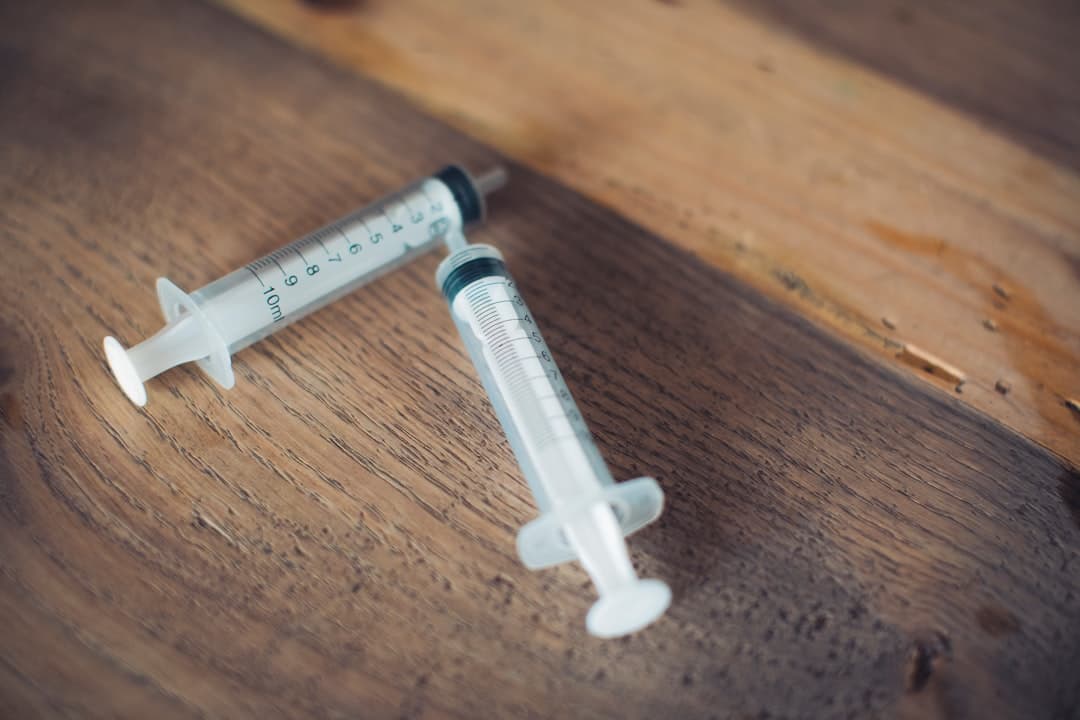
If you've spent more than a few hours reading peptide forums you've seen the IGF-1 DES vs LR3 debate. Both are research-chemical analogs of human IGF-1 modified to dodge the binding proteins that neutralize the native molecule. Both are sold by the same vendors, often on the same shelf. They are not, however, the same compound — and the differences shape which one is actually useful for hypertrophy, where most strength athletes end up running LR3 over DES, and why DES has the smaller, more specialized niche.
What's actually different
Native IGF-1 is a 70-amino-acid peptide with a half-life of about 10 minutes in circulation, because it gets bound up in IGF binding proteins (IGFBPs 1–6) almost immediately. The two analogs sidestep that in different ways.
| Property | IGF-1 LR3 | IGF-1 DES |
|---|---|---|
| Modification | Arg3 substitution + 13-residue N-terminal extension | First 3 N-terminal residues (Gly-Pro-Glu) cleaved off |
| Receptor affinity (vs native) | Roughly comparable, slightly lower at IGF-1R | Higher — about 5–10× at the IGF-1 receptor |
| IGFBP binding | Markedly reduced | Markedly reduced |
| Half-life (circulation) | ~6 hours | ~20–30 minutes |
| Practical action | Long, systemic anabolic signal | Short, intense local signal |
| Typical route | SubQ, sometimes IM | Bilateral subQ near the muscle worked, or pre-workout |
LR3 trades a small amount of receptor affinity for an enormous gain in half-life. DES does the opposite — it trades half-life for stronger receptor binding, and in practice that means a brief, sharp anabolic pulse rather than a sustained signal.
Where each one fits
LR3 is the workhorse. A daily 30–50 mcg subQ injection produces a multi-hour systemic IGF-1 signal that supports recovery, satellite-cell activity, and net protein synthesis. It is the IGF analog around which most real-world anabolic peptide programs are built. See the IGF-1 LR3 pillar for the broader mechanism and dosing context.
DES has a niche use case. Because of the short half-life and high local affinity, DES is most commonly run as a site-targeted, pre-workout injection — small doses (50–100 mcg) bilaterally into the muscles being trained, 15–30 minutes before the session. The theoretical case is that you concentrate the IGF-1 signal in tissue that's about to receive maximal mechanical and metabolic stress, then it clears before triggering the systemic side effects (hypoglycemia, sleepiness) that LR3 can produce.
The catch is that "theoretical case" carries weight here. Human pharmacokinetic data on injected DES in healthy lifters is essentially absent. Most of the real-world dosing strategies are extrapolated from rodent work and bodybuilding-community trial-and-error.
Side-effect comparison
The two share most of the same side-effect profile because they hit the same receptor — but they hit it at different speeds.
| Side effect | LR3 | DES |
|---|---|---|
| Hypoglycemia | More likely; longer signal can drop blood glucose | Less likely systemically; can occur locally |
| Sleepiness / fatigue | Common in first 1–2 weeks | Less reported |
| Joint or carpal-tunnel-style symptoms | Possible at high doses | Uncommon |
| Local injection-site reaction | Mild, occasional | More common with bilateral pre-workout dosing |
| Mitogenic / proliferative theoretical risk | Same receptor, same theoretical concern | Same |
The hypoglycemia question matters most. LR3 at standard doses can drop fasting glucose enough to require a planned snack within 30–60 minutes of injection. See hypoglycemia on IGF-1 LR3 for the practical management. DES, because of its short half-life and local injection target, doesn't usually produce the same systemic glucose drop — but you can still feel a brief lightheadedness if you take a meaningful dose.
Why most lifters pick LR3
A few reasons, ranked by what comes up most often:
Logistics. LR3's once-daily dosing is straightforward. DES requires multiple injections per training day, often into the specific muscles being worked. For most users that's more friction than the theoretical local-targeting benefit justifies.
Cost. LR3 is more widely manufactured and stocked. DES is more expensive per microgram and harder to source from vendors with reliable third-party Certificates of Analysis.
Effect duration. A 6-hour active window catches more of the day's anabolic activity — meals, training, post-workout recovery — than a 20-minute pulse. For users running peptides as a recovery and recomposition tool rather than a competitive-level pre-contest tool, that breadth wins.
Real-world feedback. When you read longitudinal logs from lifters running both, LR3 results are generally more consistent and easier to attribute. DES results are sometimes spectacular and sometimes invisible — a pattern that often signals high variance in either dosing or product quality.
Where DES still earns the spot
DES is genuinely useful if:
- You are running competitive bodybuilding or physique work and want pre-workout local IGF-1 signaling
- You have an established LR3 baseline and are layering DES for specific lagging body parts
- You can source DES with a reliable third-party Certificate of Analysis — see reading a COA worked example
- You can tolerate the additional injection logistics
For the vast majority of strength athletes — lifters, athletes managing recovery, recomp-focused users — LR3 is the right starting tool, and DES is something you might layer in later if you have a specific reason.
What to actually do
If you're choosing between the two for a first IGF-1 cycle, the practical answer is straightforward.
- Start with LR3 — daily 20–40 mcg subQ, 4–6 weeks, paired with hypoglycemia awareness. Establish your baseline response.
- Track outcomes — body comp, training performance, recovery quality, fasting glucose, sleep
- Decide if DES is worth adding — most users find it isn't, given the cost, sourcing, and logistics
- If you do add DES, run it as a layer on top of LR3 for specific goals, not as a replacement
The IGF-1 family is one of the more powerful peptide categories — and one of the easier categories to overspend in. A clean LR3 protocol with conservative dosing and good labs covers what most lifters actually need. DES is a tool for the specific case where local pre-workout signaling matters more than systemic recovery, and that case is narrower than the marketing suggests.
Related reading
Free weekly newsletter
Get the strength peptide highlights, weekly.
One short email a week — new guides, study readouts, supply updates, and dosing tips. Plain-English, no spam.
Unsubscribe anytime. We never share your email.