Does follistatin really build muscle?
Yes, follistatin antagonizes myostatin and produces muscle growth — but the human peptide market signal is far smaller than animal data, and purity is a real risk.
Updated May 8, 2026 · 4 min read
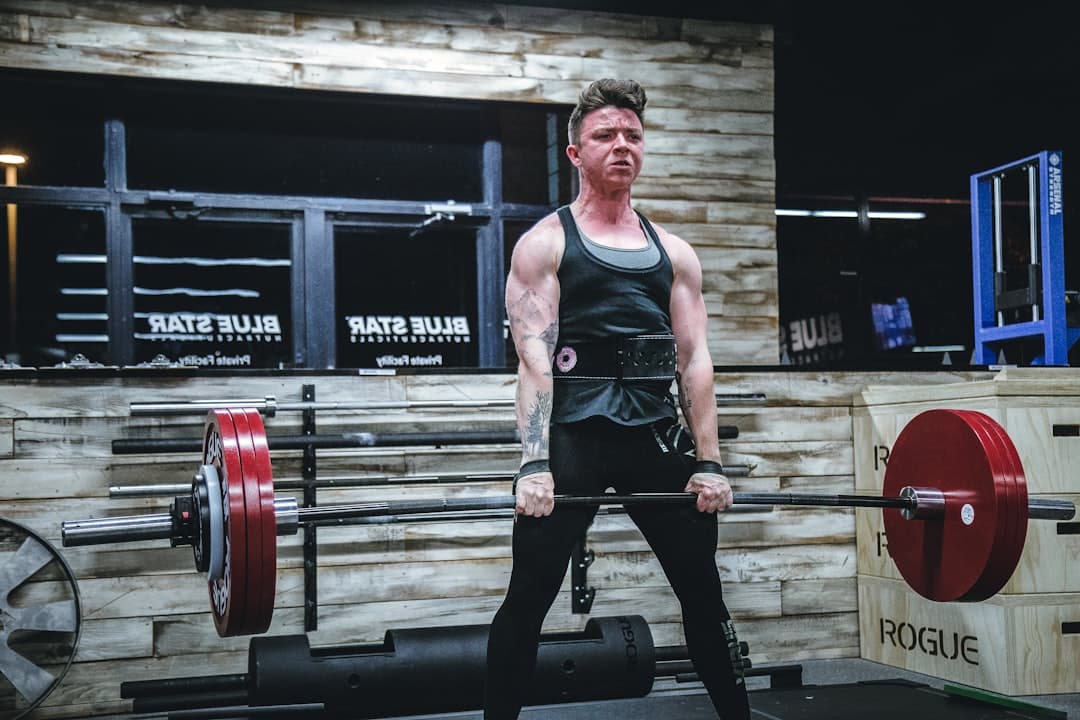
Yes, but the gap between the animal data and the real-world peptide-market data is enormous. Follistatin is a real myostatin antagonist, and in mouse and primate models it produces dramatic muscle hypertrophy. The injectable follistatin sold to lifters does not come close to those results. The reasons are partly biology — short half-life, dose limits, no genetic-circuit advantage — and partly the supply: most of what's sold as "follistatin 344" is poorly characterized, inconsistently dosed, and expensive.
What follistatin actually does
Follistatin is a circulating protein that binds and neutralizes myostatin (GDF-8) and activin, two TGF-β family proteins that act as brakes on skeletal-muscle growth. Block the brakes and muscle gets bigger.
The two relevant variants you'll see in the market:
| Variant | Distinguishing feature | Half-life |
|---|---|---|
| FST-344 | Has a heparin-binding domain; binds to cell surfaces | Longer (hours) |
| FST-315 | Circulating form; no heparin binding | Shorter |
Most peptide vendors sell FST-344 because the longer half-life makes the dosing math more reasonable. The biology is similar between the two.
What the animal data shows — and the human data doesn't
The famous "double-muscled" phenotypes — Belgian Blue cattle, the German "Liam" toddler, certain whippets, and myostatin-knockout mice — all involve lifelong absence or genetic suppression of myostatin. That is not what an adult lifter injecting peptide follistatin is doing.
| Setting | Myostatin pathway state | Result |
|---|---|---|
| Genetic myostatin knockout (lifelong) | Permanent, total | Massive hypertrophy from birth |
| AAV gene therapy delivering follistatin (animals) | Sustained, high local levels | Substantial localized hypertrophy |
| Injected peptide follistatin (humans, real-world) | Short pulses, systemic | Modest, hard to distinguish from training |
Adult skeletal muscle responds to brief myostatin suppression — but the response is much smaller than the lifelong-suppression literature suggests. Add in dose limits, short half-life, and supply quality, and the realistic upside shrinks further.
What users actually report
In peptide-community feedback, the most consistent self-reports are:
- Modest scale movement (1–3 lb lean mass) over 8–12 weeks on top of an effective training and nutrition baseline
- Subjective increase in pump and recovery
- No reliable signal that the gains are larger than what an aggressive training cycle alone produces in the same window
The strongest enthusiast claims — 5+ lb in a month, dramatic visual change — almost universally fail to replicate. Take them as marketing or anecdote, not signal.
The supply problem
Follistatin peptides are notoriously inconsistent. Reasons:
- The molecule is large and structurally complex — far harder to manufacture cleanly than BPC-157 or ipamorelin
- Most "FST-344" sold in the research-chem channel does not come with a third-party Certificate of Analysis confirming identity, purity, and concentration
- Some vendor product is significantly underdosed; some is so impure it produces injection-site reactions disproportionate to the dose
- Cost per cycle is high — easily $500–$1,500 for an 8-week run at common dosing
If you cannot get a third-party COA, you don't know what you're injecting. That's a stronger statement for follistatin than for most peptides because the molecule is so much harder to QC. See what does a COA show and is your peptide vendor legit.
How users typically run it
Common research-chemical protocols:
| Variable | Typical range |
|---|---|
| Compound | FST-344 |
| Dose | 100–200 mcg subQ daily, sometimes split into AM/PM |
| Cycle length | 6–10 weeks |
| Stack | Sometimes with IGF-1 LR3 or GH secretagogues |
| Cost | $500–$1,500 per cycle |
Worth noting: there is no rigorous peer-reviewed dosing data for injected peptide follistatin in healthy adults. The doses circulating in the community are conventional rather than evidence-based.
Where it fits and where it doesn't
Fits:
- Advanced users who have already optimized training, sleep, and nutrition and want a non-AAS route to push past a plateau
- Stacking partners who already understand how to evaluate peptide effects against a strict baseline
Doesn't fit:
- Beginners — the cost-to-effect ratio is poor, and you should never start a peptide journey with a hard-to-QC compound. See easiest peptide for beginners
- Users without lab access for at least a basic CBC and CMP before/after
- Anyone expecting AAS-level visual transformation
What to do
If you're going to run it, the minimums:
- Buy from a vendor with a third-party COA on the specific lot
- Run an 8-week cycle with controlled training and nutrition baselines
- Take photos and basic body-comp measurements at week 0 and week 8
- Pull labs (CBC, CMP, hormone panel) before and after
- Be honest with yourself about whether the result is meaningfully different from a hard training block alone