Do peptides show up on a standard blood test?
Standard blood panels don't detect most peptides directly, but several markers — IGF-1, glucose, cortisol — can shift visibly during peptide cycles.
Updated May 22, 2026 · 4 min read
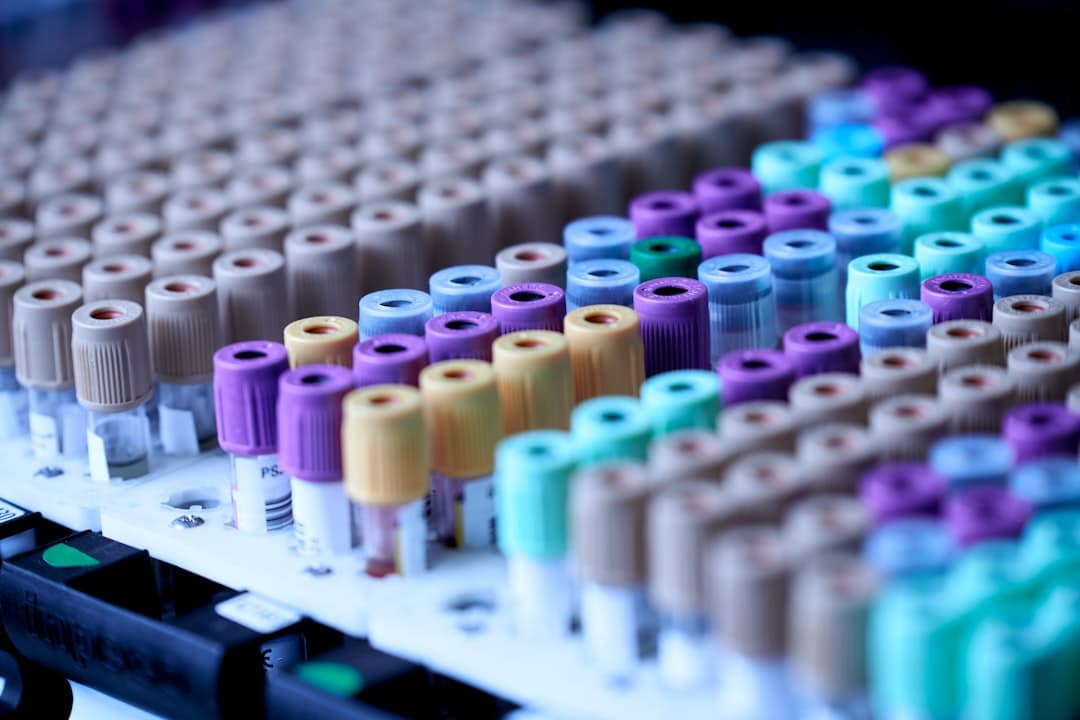
Standard blood panels don't detect most peptides directly. Routine labs — CBC, CMP, lipid panel, basic hormone screens — are not designed to identify BPC-157, TB-500, GH secretagogues, or IGF-1 LR3 as molecules. However, several downstream markers can shift visibly during a peptide cycle, and a smart clinician looking at the right panel can usually tell something is going on even without measuring the peptide itself.
The practical answer depends on whether you're asking about (a) general blood work at a doctor's visit, (b) employer or insurance screening, or (c) anti-doping testing in competitive sport. Each has a different answer.
Routine doctor's-office bloodwork
The standard panels your primary-care doctor orders won't detect peptides as such. There's no commercial assay for BPC-157 or Ipamorelin in routine clinical labs. The molecules are too small, too short-lived, and not on any standard panel.
What can show up:
- IGF-1: elevated above your normal baseline during GH-secretagogue cycles, MK-677, IGF-1 LR3, or Tesamorelin. This is the most reliable signal that something in the GH axis has been pushed.
- Fasting glucose and HbA1c: can rise during MK-677, IGF-1 LR3, or aggressive GH secretagogue cycles. Significant changes from a known baseline are the relevant signal.
- Fasting insulin: similar — can elevate, particularly with MK-677
- Prolactin: modestly elevated by some GHRPs (GHRP-2, GHRP-6) but typically still within normal lab ranges
- Cortisol: same — GHRPs can modestly elevate cortisol; not usually outside reference ranges
- Hematocrit and red blood cell counts: can rise during GH-axis stimulation; rarely flag in normal ranges
- Liver enzymes (ALT, AST): usually unaffected, but can shift modestly with some compounds
A doctor seeing elevated IGF-1 in an athletic, otherwise-healthy patient will sometimes ask about GH or peptide use, particularly if the patient also reports better recovery or sleep. Other times the result is interpreted as a normal variant and not investigated.
For the question of whether to disclose to your doctor, see should I tell my doctor I'm using peptides? and lab tests before starting peptides.
Employer and insurance screening
Standard pre-employment drug screens (5-panel, 10-panel) are designed to detect controlled substances and metabolites — opioids, amphetamines, cocaine, marijuana, etc. They don't test for any of the peptides in the strength-peptide universe. A peptide cycle will not affect a routine workplace drug screen.
Life-insurance screening is similar at the basic level. Higher-coverage policies may include broader panels — fasting glucose, lipid panel, HbA1c, sometimes IGF-1 in newer protocols. A peptide cycle that significantly shifted glucose or IGF-1 could affect insurance underwriting decisions, though most peptide-driven shifts don't move biomarkers outside normal reference ranges.
Anti-doping (WADA, USADA, NCAA)
This is a different category entirely. Competitive athletes subject to anti-doping testing should assume anything in the strength-peptide universe is a problem:
- GH secretagogues (Ipamorelin, CJC-1295, Sermorelin, Tesamorelin, GHRP-2, GHRP-6, Hexarelin, MK-677) are explicitly banned under WADA S2 (peptide hormones, growth factors)
- IGF-1 LR3, IGF-1 DES are explicitly banned under WADA S2
- BPC-157 is listed as banned under WADA S0 (non-approved substances) and has been since 2019
- TB-500 is banned under WADA S2
- Follistatin and ACE-031-type compounds are banned under WADA S4.5 (myostatin inhibitors)
- MOTS-c, SS-31 are not explicitly listed but fall under S0 as non-approved substances
- AOD-9604 has been removed from the WADA banned list, but you should verify current status — lists update
WADA-accredited labs have developed targeted assays for many of these compounds, with detection windows ranging from hours (small peptides) to weeks (longer-acting compounds like CJC-1295 with DAC). The IGF-1 elevation itself can also flag suspicion and trigger more targeted testing.
If you're subject to drug testing in any competitive context — Olympic sports, professional sports, NCAA, even some recreational federations — peptide use is a career-ending category of risk, not a "they probably won't catch it" gamble.
What changes during a cycle that's worth tracking
Independent of detection, a few markers are useful to watch during peptide cycles as health monitoring:
| Marker | Why track |
|---|---|
| IGF-1 | Confirms HPA axis response; flags excessive elevation |
| Fasting glucose / HbA1c | Watches for insulin-resistance drift on MK-677 or IGF-1 LR3 |
| Fasting insulin | Same |
| Lipid panel | Long-term cardiovascular health |
| Thyroid panel | Some GH-axis interaction; usually unchanged |
| CBC | Watches for hematocrit drift |
| Liver panel | Baseline + monitoring |
A baseline panel before starting and a follow-up panel mid-cycle is a defensible practice regardless of whether anyone else will see the results. See cardiovascular markers on a peptide cycle and baseline labs before a cycle.
The summary
Routine bloodwork won't identify peptides directly but can show their fingerprint in downstream markers. Employer drug screens don't care. Anti-doping testing is a separate world where the answer is essentially always "yes, they can detect it, and you shouldn't be using these compounds in tested sport."